
Why We Shoot Most Jobs on the Sony FX6 and FX3
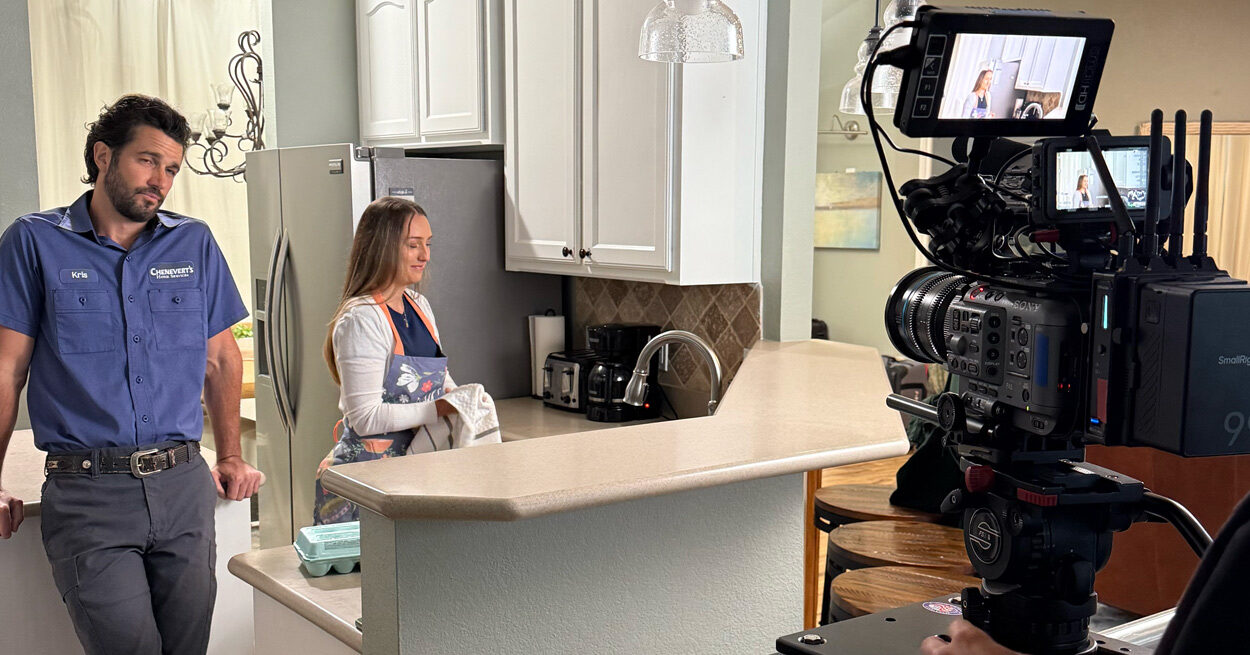
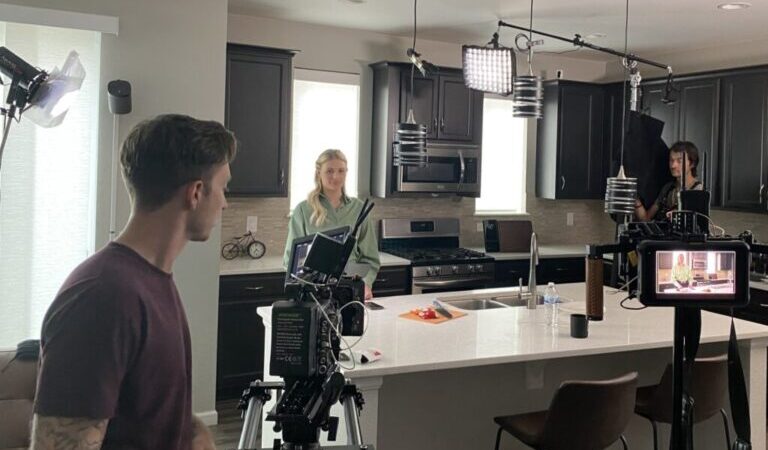
We still own RED cameras, and I still love them. But most Snowy Peak Films shoots now roll on a two-camera Sony package: the FX6 as the A camera and the FX3 as the B camera.
That wasn’t a budget decision. It came down to three things I care about as a director who has spent years behind the camera: the image holds up on a big screen, the cameras get out of the way on set, and the files don’t bury our editors. Here’s how the FX6 stacks up against a RED V-Raptor 8K VV, and why it’s the right tool for most of what we shoot.
The package: an FX6 on sticks, an FX3 everywhere else
The two cameras share the same core image. Both use a full-frame, back-illuminated sensor of about 10.2 megapixels for video, record 10-bit 4:2:2 internally, and claim 15+ stops of dynamic range in S-Log3. Shot side by side and graded together, they match far more easily than two different camera brands do.
They just do different jobs:
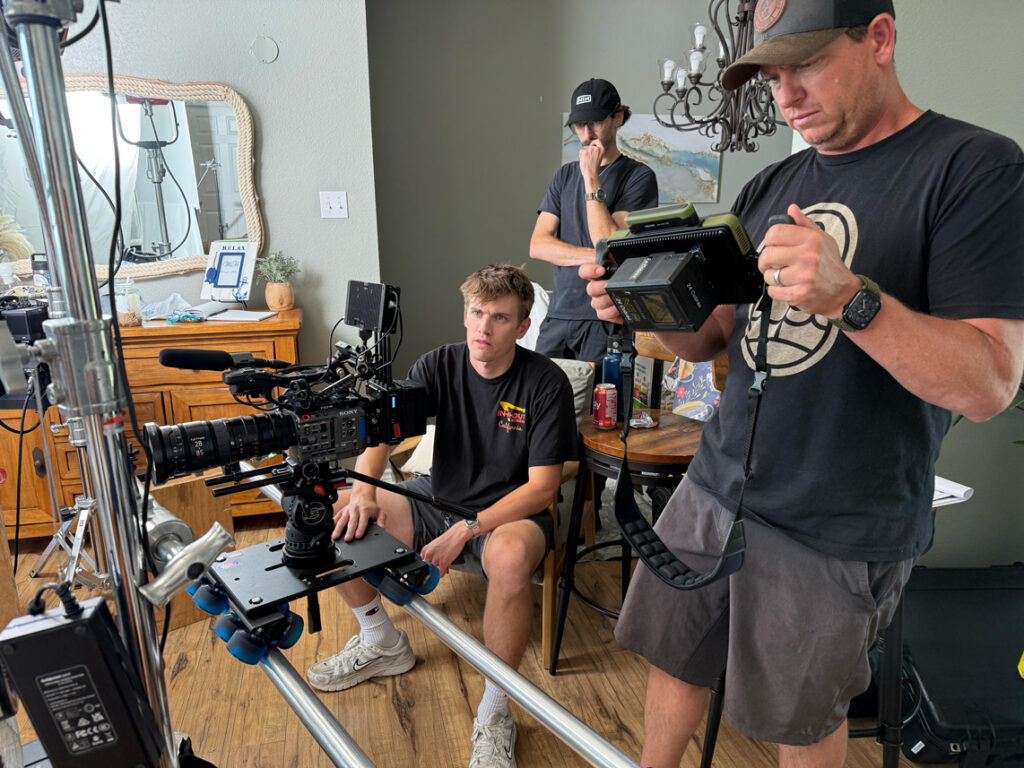
- FX6 (A camera). A full cinema body with an electronic variable ND, built-in XLR audio, SDI out and dual base ISO of 800 and 12,800. It lives on our Sachtler tripod, a shoulder rig or a SAKK camera saddle with DZOFilm Vespid primes or Catta Ace zooms. The SAKK keeps a true handheld feel while taking the camera’s weight off the operator’s arms, so we get less fatigue and less shake on long days.
- FX3 (B camera). About 640 grams body-only, with in-body stabilization, a cooling fan for long takes and an XLR handle for two channels of pro audio. It rides our DJI RS 4 Pro gimbal, goes in tight spaces, and becomes a second interview angle.
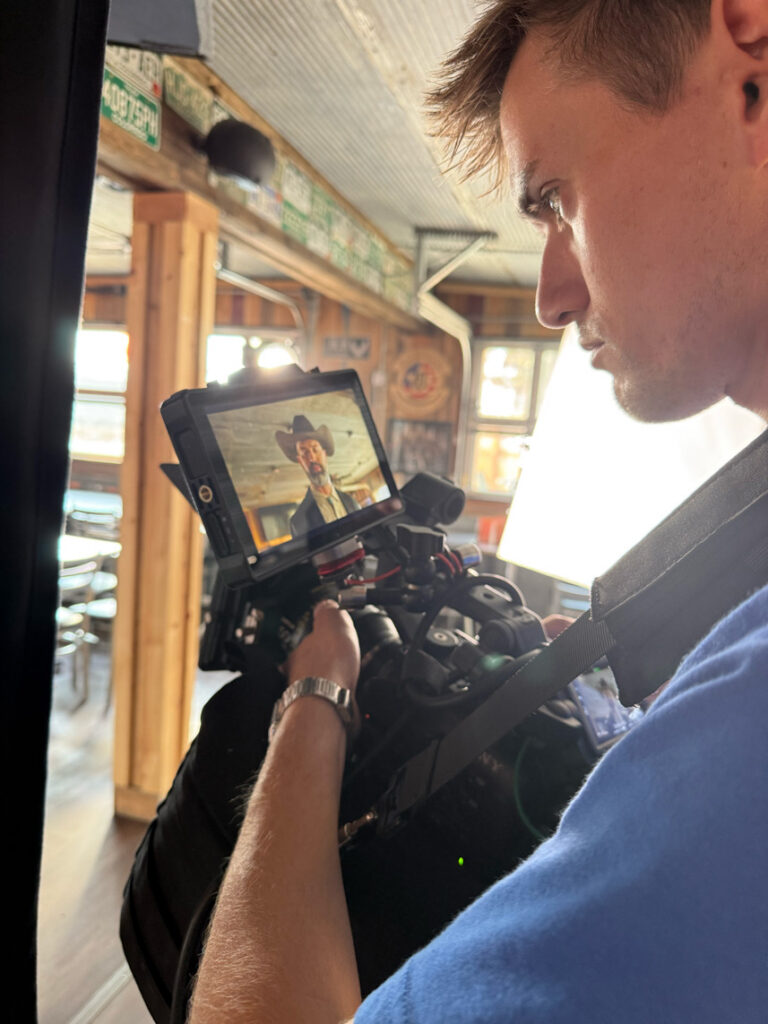
One crew, one color pipeline, one set of menus and media habits. That simplicity shows up in the schedule and the edit.
FX6 vs RED V-Raptor 8K VV: the real trade-offs
The V-Raptor wins on paper: more resolution, faster frame rates and about two more stops of dynamic range. The FX6 wins on almost everything that decides how a shoot day actually goes.
| Sony FX6 | RED V-Raptor 8K VV | |
|---|---|---|
| Resolution | 4K (DCI up to 60 fps, UHD up to 120 fps) | 8K at up to 120 fps, 6K at 160, 4K at 240 |
| Dynamic range (maker’s claim) | 15+ stops | 17+ stops |
| Recording | XAVC-I 4:2:2 10-bit, up to 600 Mbps; 16-bit RAW out over SDI | REDCODE RAW (HQ/MQ/LQ) or ProRes up to 4K |
| File size per hour (approx.) | About 108 GB in 4K 24p All-Intra (XAVC S-I) | About 1.2 TB in 8K 24p REDCODE HQ |
| Built-in ND | Electronic variable ND, 2 to 7 stops | None; matte box and glass filters |
| Autofocus | Phase-detect with face and Eye AF | Phase-detect AF |
| Weight | About 1 lb 15 oz body | About 4 lb body, before monitor, media and battery |
| Price (body) | $5,999.99 at launch | $24,995 |
File sizes are estimates; REDCODE varies with the image and the setting. Even so, an hour of 8K RED runs roughly ten times the storage of an hour of 4K FX6.
Where the extra resolution matters: reframing a wide shot into two or three tighter ones, stabilizing in post, VFX and big-screen work. Where it doesn’t: most of our deliverables are 4K or 1080p for connected TV, YouTube and Meta, and every one of those platforms compresses the image.
Commercials: more setups in the same shoot day
Most of our commercials for home services, law firms and healthcare brands are one shoot day. The camera that gets us the most good setups in that day is the right camera.
- ND without stopping. The FX6’s variable ND lets me hold my aperture while we move from a bright driveway into a dim kitchen. On a camera without internal ND, every one of those moves means swapping glass filters.
- Two angles on every take. Running the FX3 as a second camera on a gimbal or slider doubles our coverage of each performance, which matters when the talent is a business owner, not an actor.
- 4K 120 fps when we need it. Product moments, pours and action beats look great slowed down, and the FX6 still delivers them in 4K.
- Smaller crew footprint. Lighter cameras mean lighter support gear, faster company moves and less time spent in a client’s home or office.
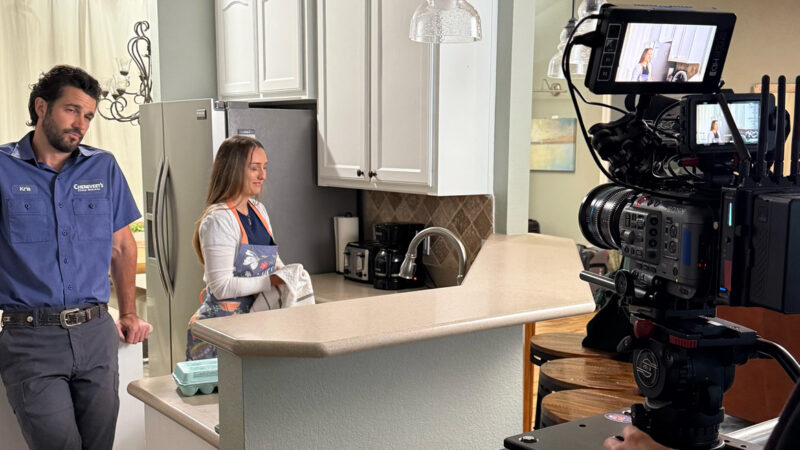
Two of our recent campaigns show what the package can do. For The Outlaw Injury Attorneys, a small crew shot for two days on the FX6 and FX3 and delivered seven broadcast-ready spots that ran on connected TV and Fox 31. For Chenevert’s Home Services, the same package produced a humorous TV campaign that went on air within a month and now earns about 380,000 monthly impressions on CTV.
When a spot is headed to a big screen or needs heavy VFX, we still bring out the RED (more on that below). For a 30-second spot on CTV, YouTube or Meta, the FX6 package delivers a cinematic image and a better shoot day.
Interviews and testimonials: long takes, clean audio, small files
Interviews are where the FX6 earns its keep. A good testimonial runs 30 to 60 minutes per person, often with two cameras rolling the whole time.
- Storage stays sane. Two cameras recording 8K RAW for a full interview day can fill several terabytes. The same day on the FX6 and FX3 in 4K All-Intra comes in under a terabyte and backs up during lunch.
- Audio goes straight to the camera. Both bodies take XLR mics with phantom power, so the lav and boom are recorded with the picture. That means fewer sync problems and faster edits.
- Autofocus as a safety net. Face and Eye AF keep the B camera sharp when a subject leans forward on a tight lens, with no focus puller.
- Low light without noise. The FX6’s second base ISO of 12,800 lets us work with a soft key and practicals in a dim conference room instead of hauling in more lights.
The result is a better-looking interview, delivered sooner, for the same budget.
Social content: speed beats specs
Social video lives on a phone screen for a few seconds, so the job is volume, variety and turnaround. Our monthly social clients need many finished pieces from each shoot day.
- The FX3 moves like a phone and looks like cinema. It’s small enough to shoot handheld or on the gimbal in a crowd, a job site or a moving vehicle without drawing attention.
- Vertical and horizontal from one take. Shooting 4K and finishing at 1080 x 1920 leaves room to crop a vertical version from a horizontal frame.
- Fast turnaround. Smaller files copy, sync and edit faster, so clients see cuts sooner and we can post while a moment is still current.
An 8K camera adds weight, data and setup time to a shoot that’s measured in reels per hour.
When we still roll RED
The RED stays in the kit because some jobs need what only it does:
- Color-critical work and extreme grading. This is RED’s biggest win. REDCODE RAW is RED’s patented compressed RAW format, and its IPP2 color pipeline gives our colorist far more information to work with than S-Log3. When a brand color has to be exact, or a look needs to be pushed hard in the grade, RED wins. When the image is properly exposed, though, S-Log3 is more than enough, and outside large-screen productions that trade-off makes sense.
- Heavy reframing or VFX. 8K gives room to punch in, stabilize or composite without losing a 4K finish.
- Extreme slow motion at high resolution. 4K at 240 fps or 6K at 160 fps.
- High-contrast scenes. The extra stops of latitude help with bright snow, sunsets through windows and other scenes that push highlights.
- Car-mounted shots. Our RED Komodo 6K has a global shutter, so fast motion and vibration don’t produce the skew and wobble a rolling-shutter sensor can show. It’s still our go-to camera for car rigs.
- Big-screen and broadcast hero spots where the client wants every bit of image quality and the budget supports the data and post time.
You can see the RED at work in our running footage for The McCarthy Companies, shot on the Komodo and V-Raptor from a tracking vehicle, and in the more than 50 commercials we’ve made for The Wilhite Law Firm from Denver to Aspen to Dallas.
Read more about our RED workflow in Why We Shoot on RED Cinema Cameras. The point isn’t that one camera is better. It’s that we match the camera to the job, and for most jobs that’s the FX6 and FX3.
The camera matters less than the plan
Clients rarely ask what camera we’re using. They ask whether the video will look great, book jobs and arrive on time. The FX6 and FX3 package lets us say yes to all three on most projects, and we keep the RED ready for the ones that need it.
Planning a commercial, a set of testimonial videos or a month of social content? Request a quote and we’ll recommend the right camera package for the job.
Notes from the field
 October 2026
Why We Shoot Most Jobs on the Sony FX6 and FX3
Our founder's take on why our Colorado crew shoots most commercials, interviews and social content on the Sony FX6 and FX3, and…
Read it →
 October 2026
10 Most Popular Lighting Techniques in Video Production
Proper lighting could make the whole difference in creating the proper visual style, mood and atmosphere of a successful video production project.…
Read it →
 October 2026
Why We Shoot on RED Cinema Cameras (and When We Don’t)
Most of our commercials and brand films are shot on RED digital cinema cameras, including the Komodo and V-Raptor. Clients sometimes ask…
Read it →
Free quote, no obligation · We respond within one business day