
Healthcare Video Production: What Hospitals and Clinics Should Plan For
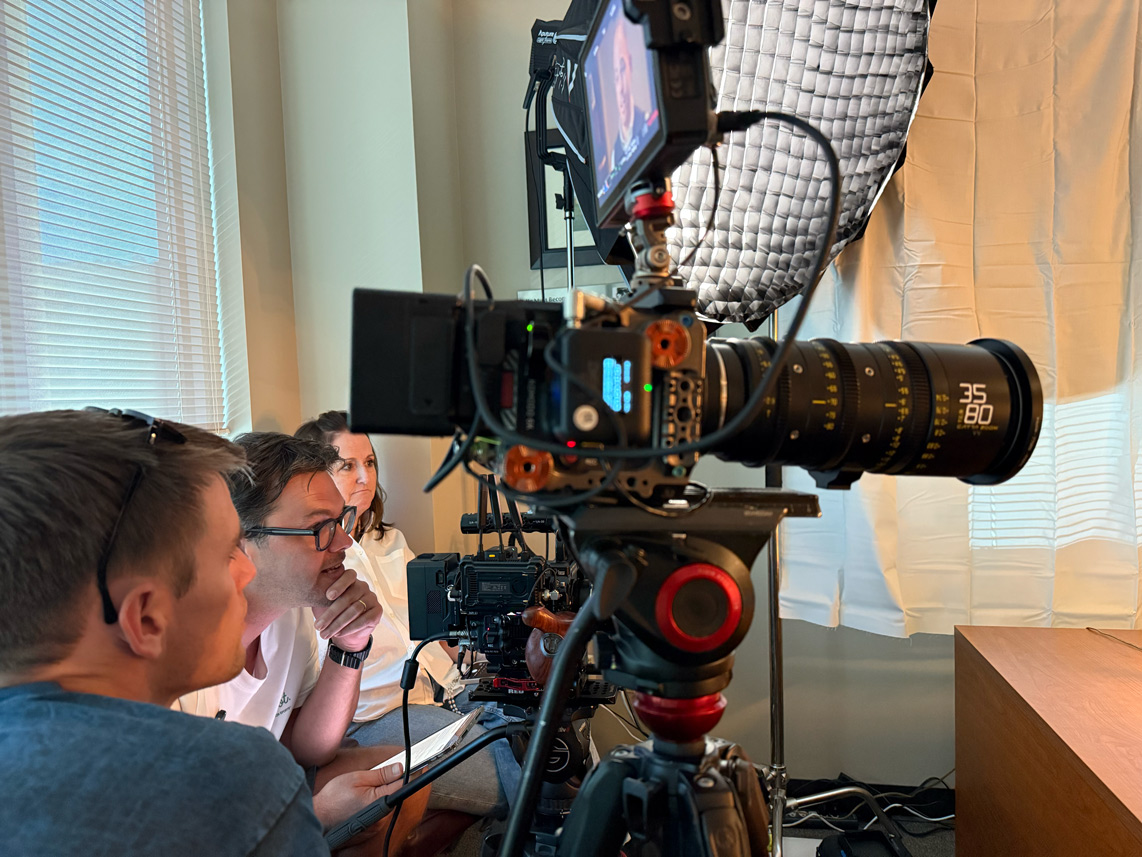
A hospital, clinic or medical company can’t film the way a restaurant or a roofer can. Patients, data and doctors’ time are all on the line, and nothing goes public until it’s been checked. Good healthcare video production plans for that from day one, so the shoot runs smoothly and the finished video makes it through review.
We’ve filmed healthcare stories in an emergency department in Louisiana, a pediatrician’s office in Arkansas, a hospital in Buffalo and working research labs from Colorado to Philadelphia to San Francisco, plus 3D and crowdfunding videos for a medical device company. Here’s what to plan for before the cameras show up, the kinds of video that work in healthcare, and what drives the cost.
Why healthcare video is different
In most industries, a video’s job is to get attention. In healthcare it also has to earn trust. A patient choosing a clinic, a lab director choosing a test, or a doctor recommending a device all need to believe what they see.
That raises the bar in three places:
- Accuracy. Claims about a product, procedure or outcome have to be right, and someone at your organization has to sign off on them.
- Privacy. Patients and staff appear on camera only with their written permission, and nothing private ends up in the frame.
- Real people, real places. The strongest healthcare stories are filmed where the work happens, with the people who do it. That means working around a building that never stops.
What to plan for in healthcare video production
1. Get everything approved before filming
The smoothest healthcare shoots are the ones where nothing is decided on the day. Before we film, your team approves the plan: who appears on camera, which rooms or areas we’ll use, and what will and won’t be shown. If anything needs a sign-off from compliance, legal or a department head, that happens first.
2. Release forms for everyone on camera
Every patient, staff member and doctor who appears on camera signs a release before we roll. We plan who’s appearing ahead of time, so the forms are ready and nobody is surprised on shoot day.
3. Plan around a working building
Clinics, hospitals and labs don’t stop for a film crew. We work with your team on which areas we can use and when, so patients keep getting care and staff can keep working. Planning the day around your schedule, not ours, is what keeps a healthcare shoot welcome.
4. A final check before anything goes public
When the edit is done, your organization reviews it before anything is published. That’s the last line of defense for accuracy and privacy, and we build time for it into the schedule from the start.
Types of healthcare video we produce
Every healthcare project is different, so deliverables are built around what you need. Here’s what we’ve made for healthcare and medical clients:
- Commercials. Spots for TV, streaming and social that bring in patients or customers.
- Mini-documentaries. Short films about the people behind the work: clinicians, scientists, and the patients they help.
- Experiential and event video. Video built for conferences, launches and live events.
- 3D video. Animation that shows what a camera can’t, like how a device works inside the body.
- Crowdfunding videos. Videos that explain a new medical product and why it deserves backing.
Real examples: Cepheid and SCIEX
We filmed both of these projects as production partners to Pebble Studios, a London creative studio.
Cepheid: “Always Onward”
Cepheid makes molecular diagnostic tests used in hospitals and clinics around the world. Its “Always Onward” series tells the stories of the clinicians who use those tests in critical moments: in the emergency room, in pediatric care, and in bringing hepatitis C testing to the point of care.
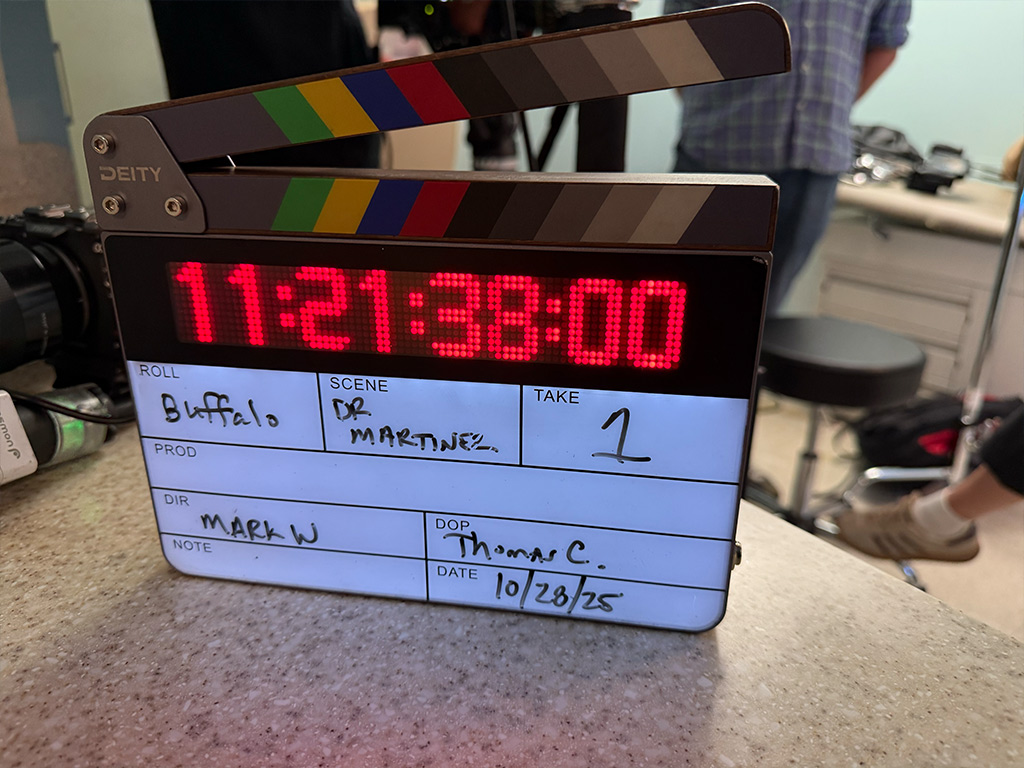
Each story was set somewhere very different: an emergency room in Shreveport, Louisiana, a pediatrician’s office in Russellville, Arkansas, and a clinic for people experiencing homelessness in Buffalo, New York. Every location had its own space limits, lighting and pace, plus patients nearby, and the travel schedule was tight.
We filmed two days at each location with a four-person crew: a two-camera interview setup, a gimbal for movement, a drone, and a small travel lighting kit. Keeping the lighting minimal let us stay out of the way of live clinical work and kept each place looking like itself. The talent was real doctors and staff, filmed where they work.
“A class act.” — Mark Witherow, Pebble Studios, on the Snowy Peak Films crew
SCIEX: “The Pursuit”
SCIEX makes the mass spectrometry instruments that drug developers use to measure molecules. Its “Pursuit” series profiles the scientists using those instruments to bring new treatments to patients.
Pebble needed scientists’ stories filmed across the US without flying a crew from Britain to every location. We shot documentary films in four cities: Golden and Colorado Springs in Colorado, San Francisco, and Philadelphia. A small crew at each stop kept us light inside working labs, and we matched the look from city to city so the films cut together as one series.
Watch our San Francisco film for SCIEX, the Sutro Biopharma story “Pioneering future treatments,” on SCIEX’s site. See the full Cepheid and SCIEX case studies for more.
What healthcare video production costs
Healthcare video is priced per project, because no two projects need the same thing. These are the factors that move the price:
- The type of video. A single interview, a commercial, a mini-documentary and a 3D animation are very different amounts of work.
- Locations and people. One doctor in one office is a different day than several clinicians at several sites.
- Approvals and review. More stakeholders and review rounds mean more pre-production and more time in the edit.
- Animation and graphics. 3D work and on-screen graphics add steps before and after the shoot.
- How many versions you need. A full-length film plus short cutdowns for social, events and your website.
Frequently asked questions
What is healthcare video production?
Video made for hospitals, clinics and medical companies: commercials, patient and clinician stories, mini-documentaries, event video, and 3D animation that explains how a product works.
How do you protect patient privacy during filming?
Everyone on camera signs a release before we film, and your team approves who and what will be shown ahead of time. Nothing goes public until your organization has reviewed the finished video.
Can you film in a working hospital, clinic or lab?
Yes. We plan the day with your team around which areas we can use and when, so care and work keep going.
Who approves the video before it’s published?
Your organization does. We build a final review into the schedule so your team can check accuracy and privacy before anything is released.
What types of healthcare videos can you make?
Commercials, mini-documentaries, experiential and event video, 3D video, and crowdfunding videos. Deliverables are built around what each project needs.
How much does healthcare video production cost?
It’s quoted per project. Price depends on the type of video, how many people and locations, the review process, any animation, and how many versions you need.
Do you work outside Colorado?
Yes. We’re based in Denver and Castle Rock, and we travel for healthcare and life science projects.
Plan your healthcare video
The best healthcare videos are planned before anyone picks up a camera: approvals done, releases signed, and the day built around your team. If you’re thinking about patient stories, our post on how we get real stories on camera covers how we interview people who’ve never been filmed before.
See our healthcare video production work, or request a free quote.
Notes from the field
 November 2026
Healthcare Video Production: What Hospitals and Clinics Should Plan For
A hospital, clinic or medical company can’t film the way a restaurant or a roofer can. Patients, data and doctors’ time are…
Read it →
 November 2026
Customer Testimonial Videos: How We Get Real Stories on Camera
How Snowy Peak Films gets customers to tell real, unscripted stories on camera, and what a testimonial video costs.
Read it →
 October 2026
How Much Does a TV Commercial Cost in Denver? (2026 Breakdown)
A Denver TV commercial starts around $8,000 to produce, and a full three-spot campaign runs about $25,000. What each level includes, what…
Read it →
Free quote, no obligation · We respond within one business day